
I’ve spent twenty-five years inside behavioral health and healthcare organizations, and I keep seeing the same pattern. Leadership blames people for problems that live in the architecture.
The outreach person gets replaced. The marketing budget gets cut. The team gets a pep talk. And the underlying structure stays exactly where it was.
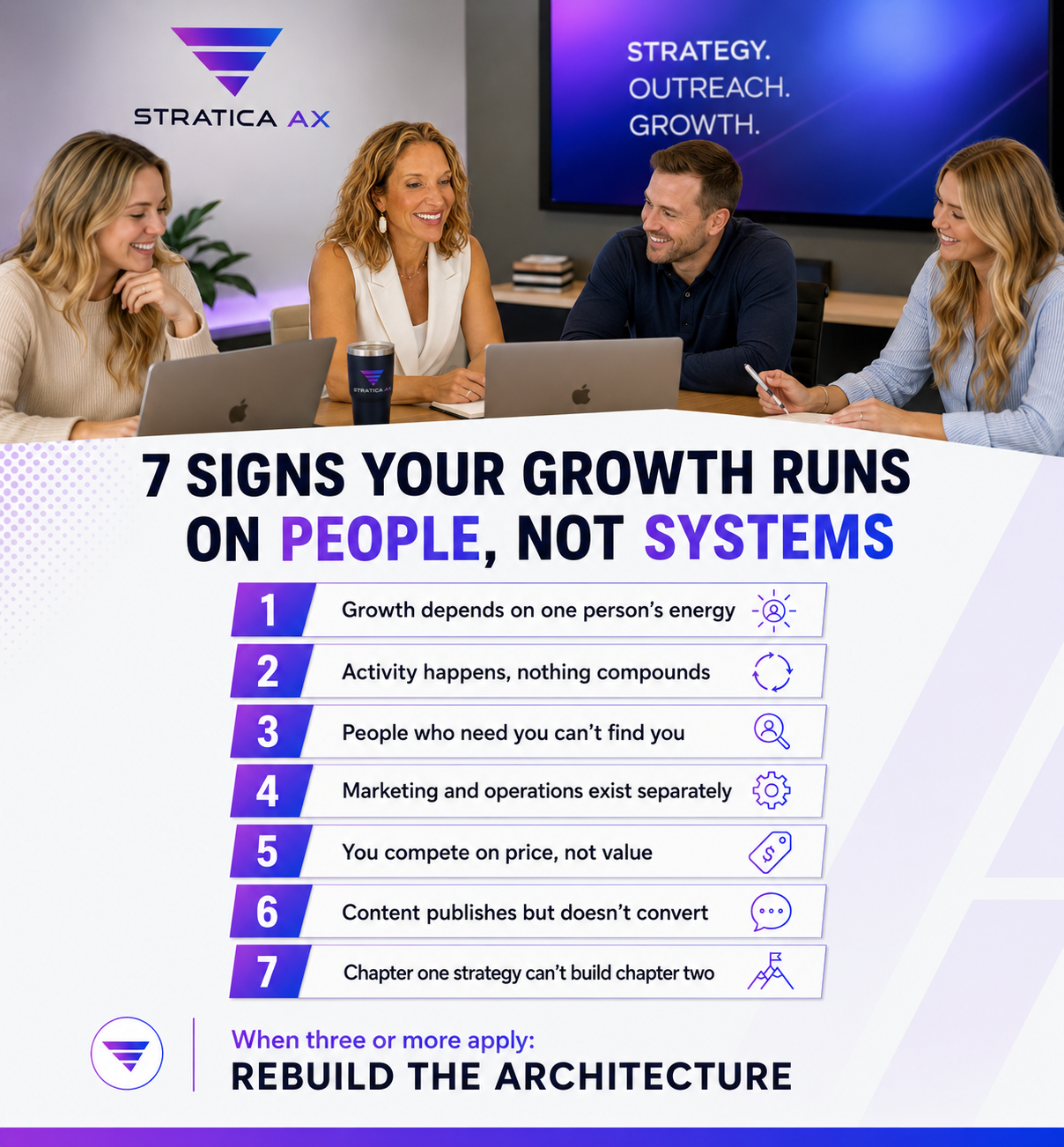
A strategic pivot is commonly misunderstood as a rebrand or a new campaign. In my experience, a real business pivot means rebuilding the growth infrastructure underneath the organization. Here are the seven signs I look for when I assess whether that rebuild is overdue.
Sign 1: Growth Depends on One Person’s Energy
Somewhere in your organization there is a person whose relationships hold the referral pipeline together. When they take vacation, referrals slow down. When they leave, referrals stop.
That person is doing good work. The structure around them is failing them.
I learned this lesson the hard way. Three heart attacks forced me to stop running my business on my own energy. Human energy has a ceiling. Systems don’t.
The healthcare data backs this up. Over 50% of clinicians and staff report burnout, and burnout reliably predicts turnover. The average turnover rate across healthcare positions sits at 22.7%, and replacing a healthcare worker costs three to four times their salary.
Diagnostic question: If your best relationship-builder resigned tomorrow, would your referral system survive the next 90 days?
Sign 2: You’re Busy, But Nothing Compounds
Activity feels like progress. Events get attended. Posts get published. Calls get made.
Then look at what remains twelve months later.
Compounding infrastructure looks different. A CRM that captures every referral source. A follow-up workflow that runs without reminders. A digital footprint that builds digital trust before anyone picks up the phone. Each piece makes the next piece more valuable.
Turnover makes this worse. When people leave, institutional memory leaves with them, and remaining staff absorb the load. Fatigue rises, and quality of care drops with it.
💡 A useful test: list your growth activities from last quarter. Mark each one that still produces value today. If the list is mostly blank, you’re renting growth instead of building it.
Diagnostic question: Which of last quarter’s efforts are still generating referrals right now, without additional work?
Sign 3: The People Who Need You Can’t Find You
In most industries, weak visibility means lost revenue. In behavioral health, it means people who need care never reach it.
Nearly 149 million Americans live in federally designated Mental Health Professional Shortage Areas. Research on access barriers consistently identifies lack of awareness of available resources as a primary barrier to care.
Read that carefully. Care often exists. People simply can’t find it.
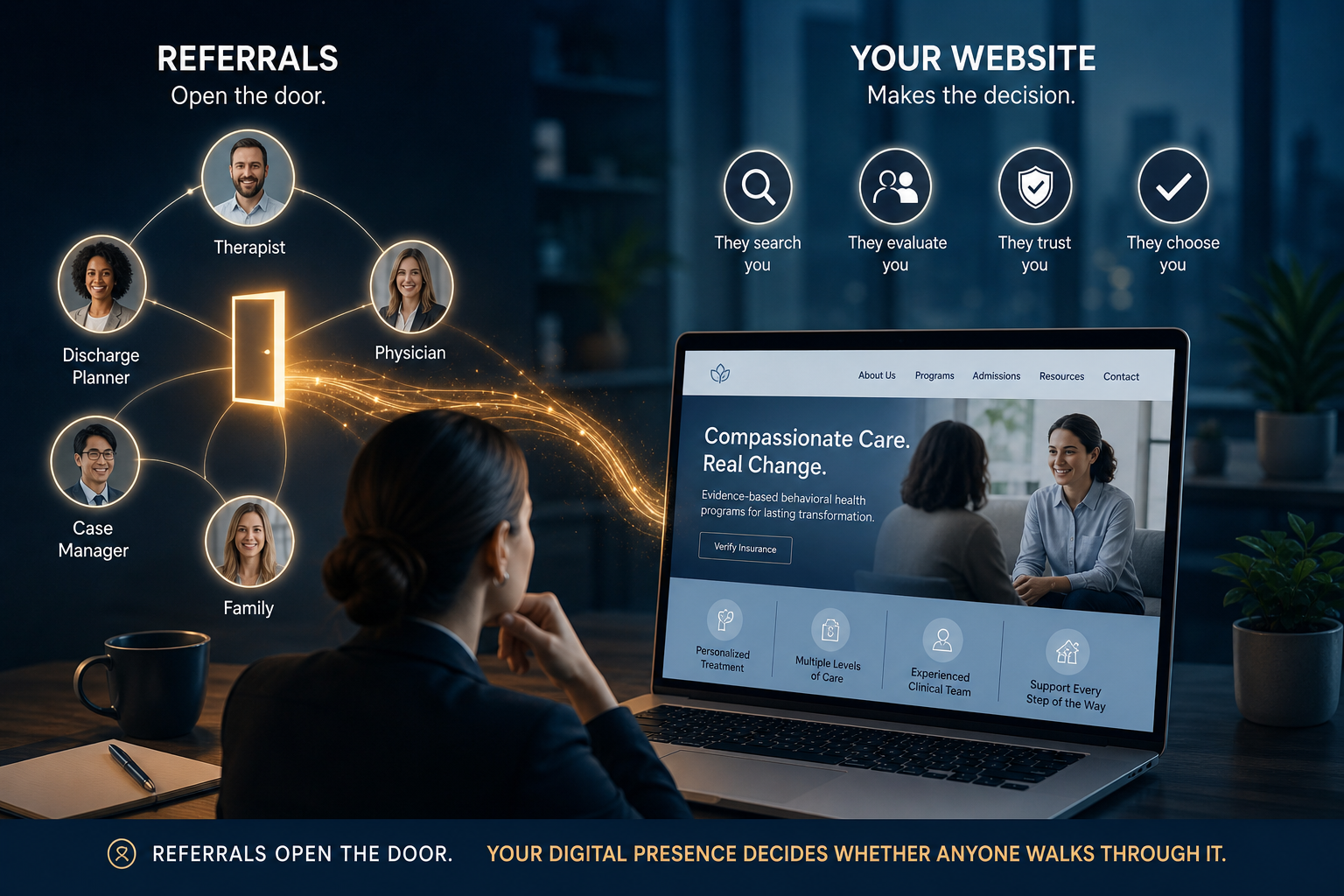
This is why I treat behavioral health marketing as an access function. When your organization is hard to find online, the gap between your care and the community stays open. Someone falls through it.
Diagnostic question: If a family in crisis searched for your services tonight, would they find you, understand you, and trust you enough to call?
Sign 4: Marketing and Operations Live in Separate Worlds
Here is something the industry avoids saying out loud. More visibility on top of broken operations makes things worse.
If your intake process loses inquiries, every marketing dollar amplifies that loss. If your phone team can’t answer questions about admissions, your ads generate frustration at scale.
Patients experience your organization as one continuous thing. Research confirms that patients don’t separate your website, your call center, and the clinical visit. When one piece breaks, the whole perception changes. Disconnects between marketing promises and patient experience produce lower satisfaction, negative reviews, and wasted spend.
⚠️ Before you increase visibility, audit what happens after someone reaches out. Fix the pathway first.
Diagnostic question: Do you know exactly what happens, step by step, in the 48 hours after a new inquiry arrives?
Sign 5: You Compete on Price Because You Can’t Articulate Value
When organizations can’t explain what makes their care different, they default to being cheaper or more available. Both positions erode margins and attract referral partners who leave the moment a cheaper option appears.
This is a positioning failure, and it is fixable. It requires strategic clarity: who you serve best, what outcomes you produce, and why a referral partner should trust you with their most complex cases.
Lack of market fit is the most cited reason businesses fail. Positioning is how you prove fit. A brand pivot toward clear differentiation changes the entire economics of your growth.
Diagnostic question: Can your front-line staff explain, in one sentence, why a referring provider should choose you over the organization down the street?
Sign 6: You Publish Content That Doesn’t Convert
Most healthcare organizations produce content. Very few produce content mapped to a decision journey.
Healthcare marketing teams tend to focus on early-stage awareness and stop there. A working content strategy for healthcare covers the full path. Awareness content answers the questions people ask at the start. Trust content addresses fears about treatment. Conversion content removes friction from the decision to reach out.
Random posts create noise. Mapped content creates movement.
Diagnostic question: For each piece of content you published last month, can you name the specific decision it helps someone make?
Sign 7: The Strategy That Built Chapter One Can’t Build Chapter Two
The relationships, hustle, and founder energy that got you to your current size carried you as far as they can. This is a normal stage, and it is commonly overlooked because the old strategy still produces some results.
The evidence on pivoting is striking. Around 70% of successful startups pivoted at least once before finding the right model. Timing matters enormously. Research shows that mistimed pivots, executed too early or too late, drive the majority of failures, while founders following evidence-based frameworks show 3.4x lower failure rates than those operating on intuition.
The lesson: pivot on evidence, and pivot before the old model fully breaks.
Diagnostic question: Is your current growth strategy a deliberate design, or is it the accumulated habits of your first chapter?
What a Real Strategic Pivot Looks Like
A reactive pivot changes the surface. New logo, new tagline, new campaign, same structural gaps underneath.
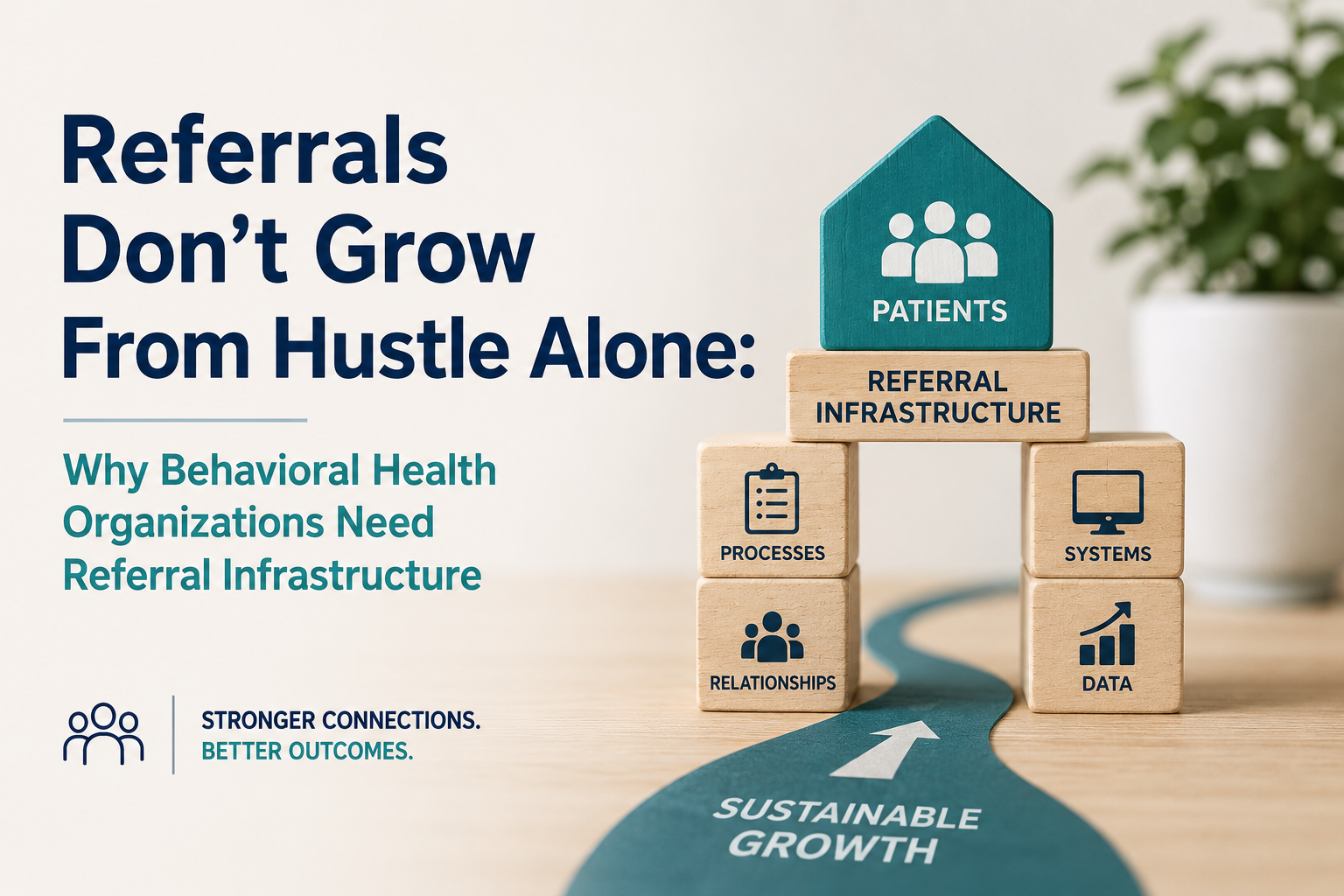
An architectural pivot rebuilds the foundation. In my work, that means five layers:
- Strategic clarity. Defined positioning, defined audience, defined outcomes. Strategy precedes content, always.
- A referral system. Documented pathways, tracked sources, and a CRM that holds relationships instead of one person’s memory.
- Digital trust infrastructure. A findable, credible digital footprint that builds trust before first contact.
- Operational alignment. Intake, follow-up, and admissions processes that can absorb the visibility you create.
- Measurement. Clear indicators that tell you what works, so decisions rest on evidence.
When these layers exist, growth stops depending on heroics. The data supports the shift: organizations that address leadership behavior and system design together see engaged teams deliver 14% to 18% higher productivity and up to 51% lower turnover.
Systems protect your organization and the people it serves. That is the whole philosophy in one sentence.
Where to Start
If three or more of these signs describe your organization, the problem sits in your architecture. Your people are working hard inside a structure that can’t reward the effort.
This is the work I do at Stratica AX. I operate as a fractional executive growth team for behavioral health, healthcare, and wellness organizations. I assess where the infrastructure is missing, then build the healthcare growth strategy and systems that close the gap: referral pathways, CRM workflows, positioning, and content built around real decision journeys.
If you want an honest read on where your growth infrastructure stands, reach out to Stratica AX. I’ll show you exactly where the structure is missing. The fix starts there.