
For behavioral health, mental health, and wellness organizations, referrals are often treated like a relationship game.
Meet more people. Shake more hands. Drop off more cards. Attend more networking events. Stay visible in the community.
And yes, relationships matter.
In this industry, trust is everything. A referral source is not just sending a name across a desk. They are placing their credibility, judgment, and reputation behind that recommendation.
But here is what many organizations miss:
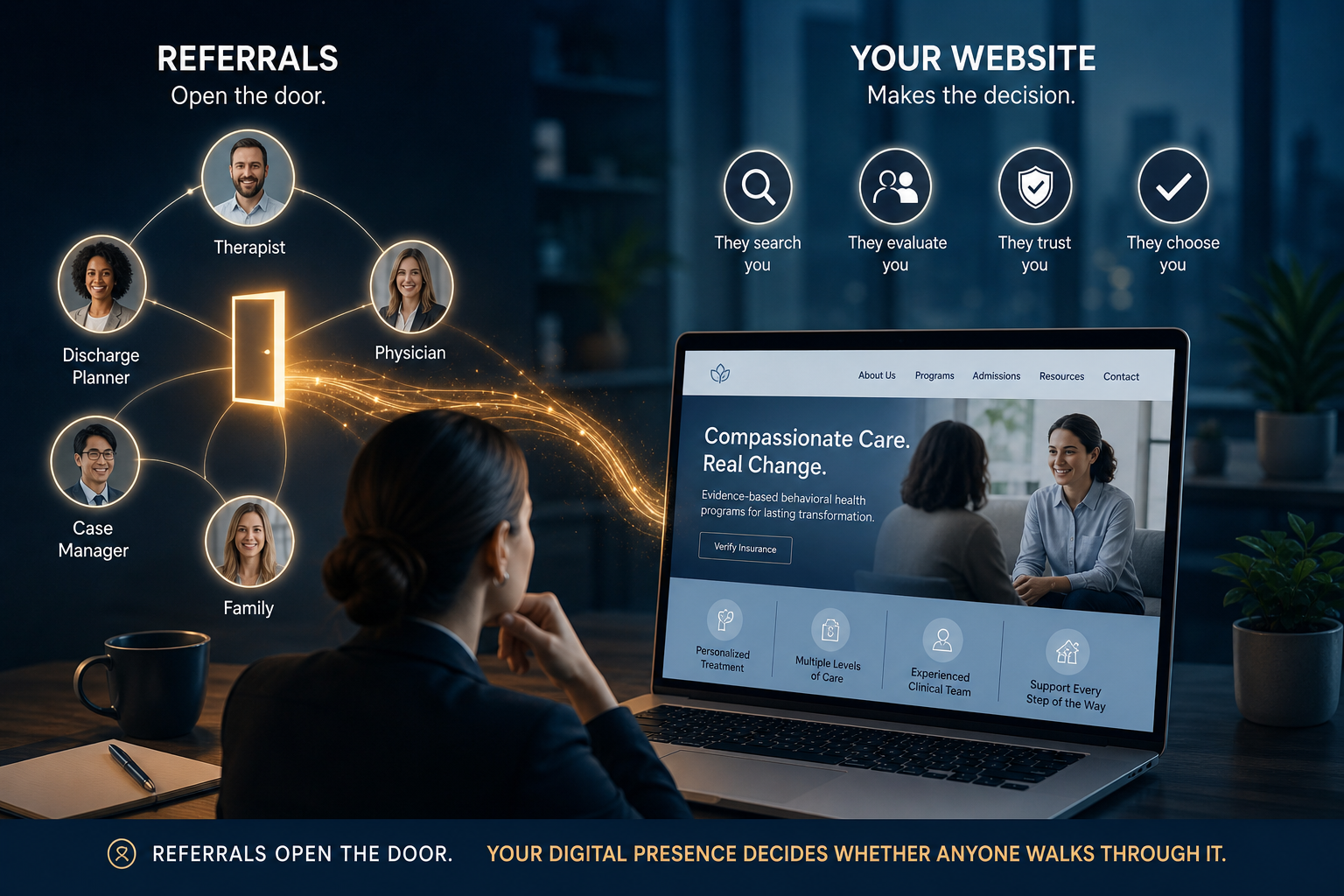
Referrals do not grow from relationships alone. They grow from trust, clarity, consistency, and operational follow-through.
That means referral growth is not just a business development function. It is an infrastructure issue.
The Problem With Traditional Referral Growth
Many organizations rely heavily on face-to-face outreach to build referral relationships. For a while, that may work. A strong business development representative, founder, or executive can build trust quickly through personal connection.
But the problem is that this model is difficult to scale.
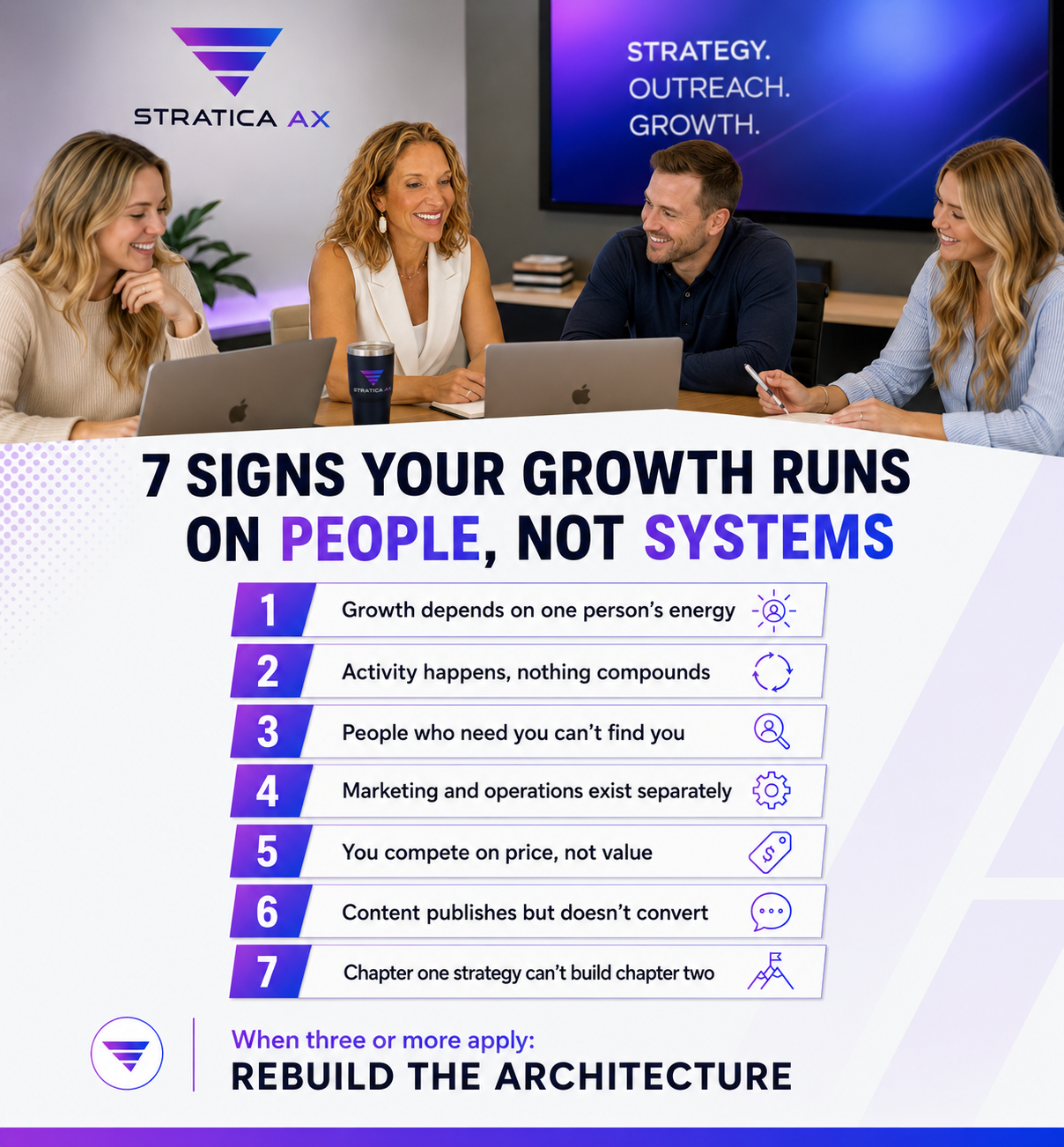
It often becomes dependent on one person’s energy, personality, availability, and follow-up habits. If that person gets busy, leaves the role, burns out, or stops nurturing the relationship, referral momentum slows down.
That is when growth becomes reactive.
The organization may have good services. The clinical team may be strong. The need may be high. But referrals still become inconsistent because the system behind the relationship is weak.
This is where many organizations confuse effort with strategy.
More outreach is not always the answer.
Better infrastructure is.
What Actually Creates Referrals?
Referral sources need more than awareness. They need confidence.
They need to know:
- Who you serve
- When to refer
- What happens after they refer
- How quickly someone will respond
- Whether the client or family will be treated well
- Whether the process will be clear
- Whether the referral will reflect well on them
This is especially true in behavioral health, where care decisions are personal, emotional, and often urgent.
A referral source may like your organization. They may even believe in your mission. But if they are unclear about your services, unsure about the intake process, or worried that communication will fall through the cracks, they may hesitate to refer.
That hesitation is not always a marketing problem.
Sometimes it is an accountability problem.
Intake Is Part of Your Referral Strategy
One of the most overlooked parts of referral growth is the intake experience.
Organizations often invest time and money into visibility, outreach, websites, social media, and referral relationships, but then lose trust at the point of contact.
If calls are missed, follow-up is slow, instructions are unclear, or families feel unsupported, referral sources notice.
And they remember.
A strong referral strategy must include:
- Clear intake pathways
- Fast response times
- Warm customer service
- Internal accountability
- Communication with referral sources when appropriate
- A process that makes people feel guided, not passed around
You cannot out-market a poor intake experience.
Every referral touchpoint either builds trust or weakens it.
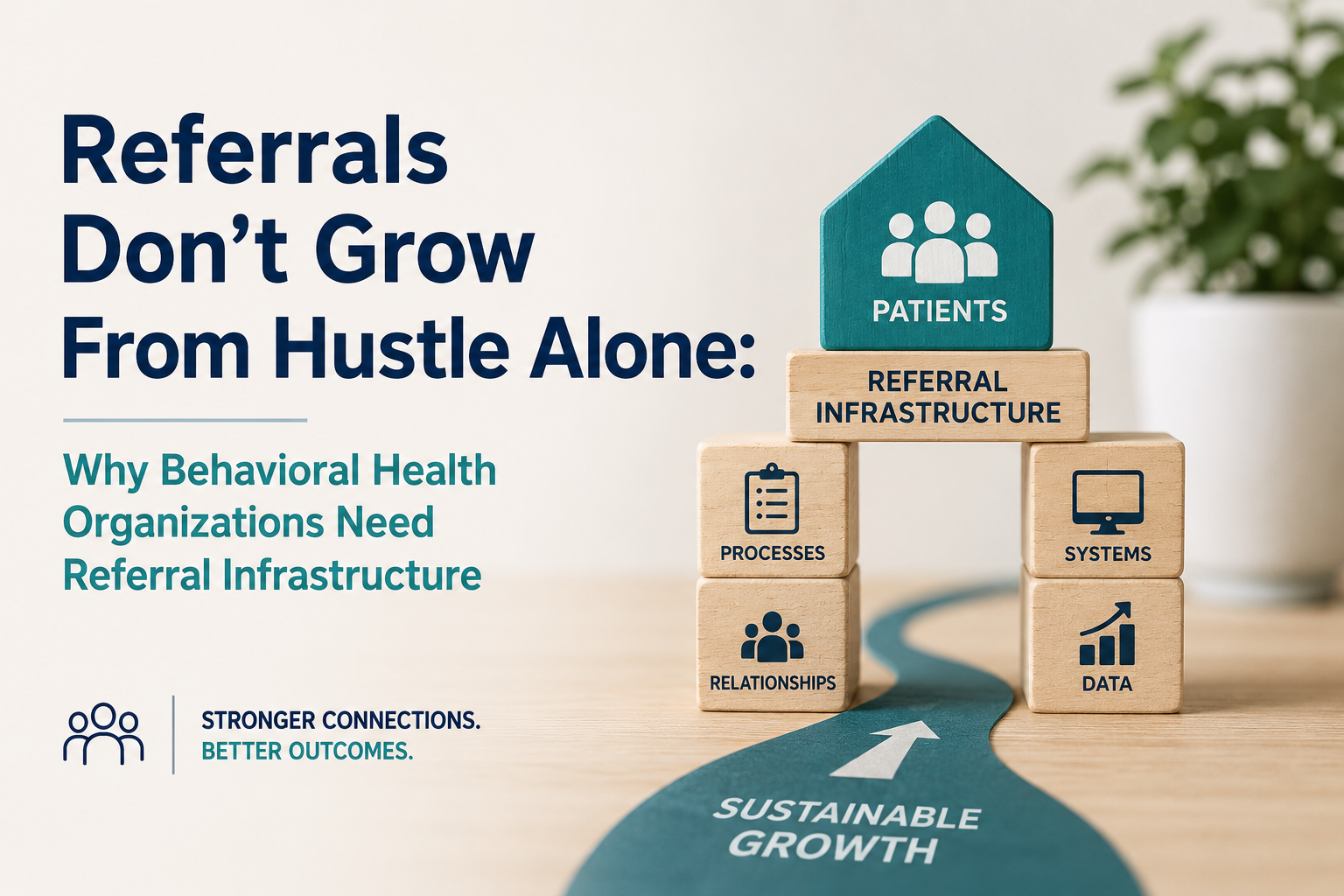
Your Website Is the New Second Handshake
Even in relationship-driven industries, digital presence matters.
After a referral source hears about your organization, meets your team, or considers sending someone your way, they will often look online.
They will visit your website. They may check your social media. They may look for leadership credibility, service clarity, reviews, educational content, and signs that your organization is active and trustworthy.
Your digital presence does not replace relationships.
It reinforces them.
Your website should make it easy for referral sources and families to understand:
- What you do
- Who you help
- What makes you different
- How to refer
- What happens next
- Why they can trust you
If your website is confusing, outdated, vague, or hard to navigate, it creates friction.
And friction costs referrals.
Visibility Without Follow-Up Is Not a Strategy
Many organizations make initial contact with referral sources and assume the relationship is established.
But referral relationships decay without consistent touchpoints.
A single meeting is not a strategy. A one-time email is not a strategy. Dropping off materials once is not a strategy.
Referral growth requires a system for staying visible over time.
That may include:
- Email nurture campaigns
- Educational content
- LinkedIn visibility
- Referral source segmentation
- CRM tracking
- Follow-up workflows
- Consistent check-ins
- Service updates
- Clear referral reminders
The goal is not to overwhelm referral sources.
The goal is to remain professionally present, helpful, and easy to remember.
The Role of Virtual Outreach
Face-to-face outreach can build trust quickly, but it is expensive, time-consuming, and difficult to scale.
Virtual outreach can be effective when it is used correctly.
The purpose of virtual outreach is not to replace human trust. It is to create consistency, expand visibility, and support relationship development at scale.
Virtual outreach can help:
- Identify referral sources
- Organize contact lists
- Segment referral audiences
- Send strategic emails
- Maintain follow-up
- Track relationship activity
- Schedule virtual conversations
- Keep the organization visible
- Prevent warm leads from being forgotten
But virtual outreach has limitations.
It cannot fully replicate executive presence, deep relationship nuance, or the emotional trust created through meaningful human connection.
That is why the strategy cannot be “send more cold emails.”
The strategy must be to build a relationship system.
What a Strong Referral Infrastructure Includes
For an organization to grow referrals consistently, several pieces need to work together.
1. Clear Positioning
Referral sources need to understand exactly who you serve and when to send someone to you.
If the message is too broad, too clinical, too vague, or too complicated, people will not remember it.
Clarity creates confidence.
2. Strong Digital Presence
Your website, social media, and online authority should support the trust you are trying to build in the market.
Everything points back to your digital footprint.
3. Accountable Intake
The referral process must be easy, responsive, and professional.
A strong intake process protects the trust created through outreach.
4. Consistent Follow-Up
Referral relationships need ongoing nurture.
A CRM, email system, and clear accountability process help prevent relationships from being neglected.
5. Educational Content
Referral sources are more likely to refer when they understand the service, the process, and the outcomes.
Educational content builds trust before the conversation ever happens.
6. Relationship Segmentation
Not every referral source deserves the same level of attention.
High-value referral partners should be identified, prioritized, and nurtured strategically.
7. Internal Alignment
Marketing, intake, operations, leadership, and business development cannot operate in silos.
Referral growth requires the whole organization to support the same promise.
What You Can Control — And What You Cannot
No organization has complete control over referrals.
You cannot control market saturation, referral source loyalty, insurance dynamics, census fluctuations, competitor activity, or every external relationship.
But you can control the structure around your visibility.
You can control:
- Your message
- Your responsiveness
- Your website clarity
- Your follow-up system
- Your referral process
- Your content strategy
- Your operational accountability
- Your relationship tracking
- Your consistency
That is where growth becomes more stable.
Not guaranteed.
But far less chaotic.
The Future of Referral Growth Is Systems-Based
Behavioral health organizations do not need more hustle.
They need better systems behind the trust they are trying to build.
The strongest organizations will not be the ones doing the most random outreach. They will be the ones with the clearest positioning, strongest follow-up, best intake experience, most consistent visibility, and most accountable referral infrastructure.
Relationships will always matter.
But relationships without systems become personality-dependent chaos.
At Stratica AX, we believe growth should not depend on burnout, guessing, or one person carrying the entire referral strategy.
We help organizations build visibility systems that support trust, accountability, and sustainable growth.
Because referrals do not grow from noise.
They grow from clarity, consistency, and confidence.